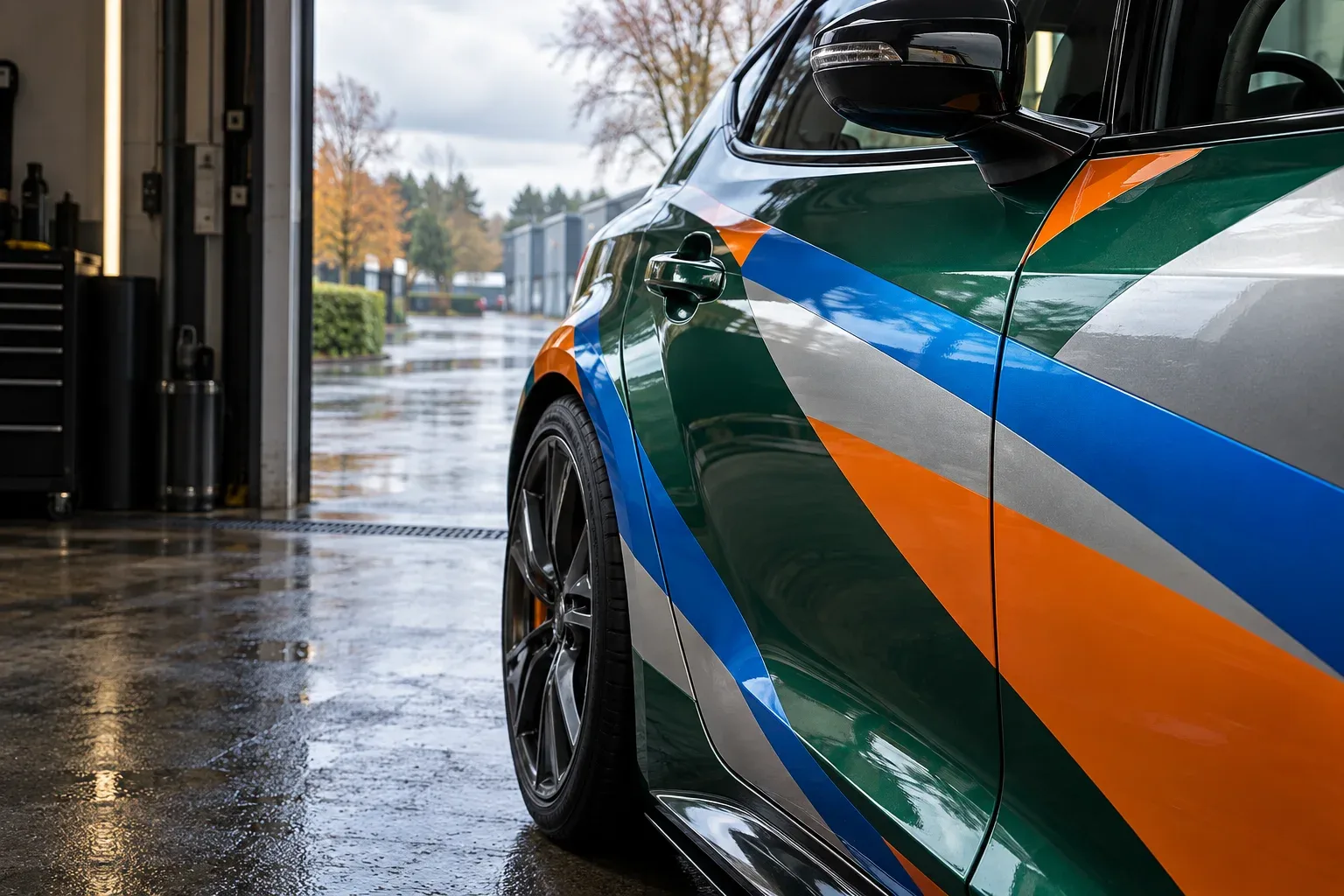
Film choice sets the starting point
Cast vinyl is generally chosen for demanding curves, long-term applications and conformability. Calendared products can suit flatter panels, shorter campaigns and appropriate cut-lettering projects. The product must be selected for the surface and intended duration.
Some colours, metallics, fluorescents and specialist finishes have different performance characteristics. The manufacturer's current technical data should be checked for the exact film.
Preparation and installation affect performance
Wax, silicone, traffic film, grease and contamination can weaken adhesion. Sound, properly cured paint provides a more predictable surface than corrosion, failing lacquer or fresh repair work.
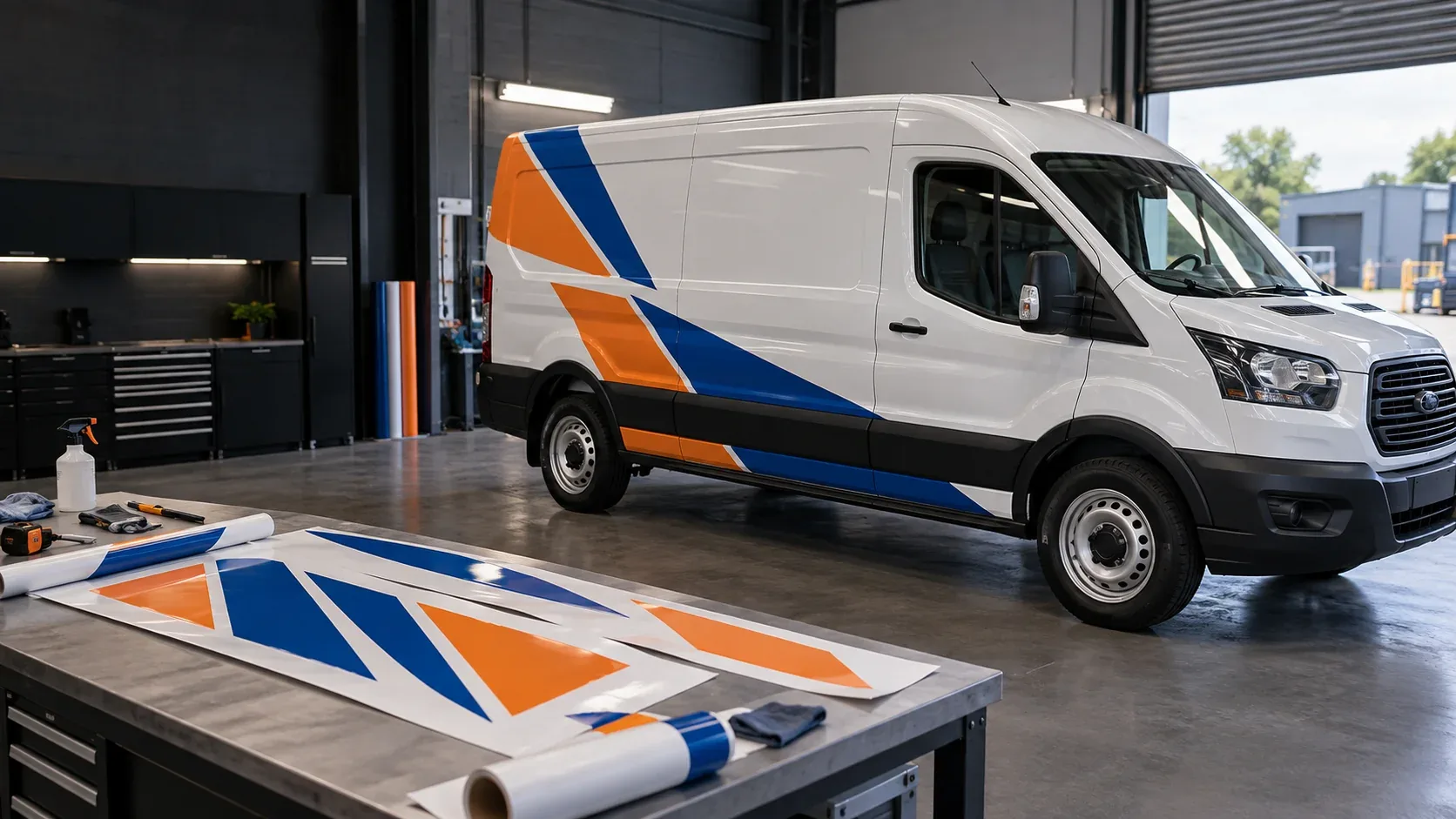
Correct application temperature, post-heating where required, edge management and panel planning help the film perform as intended. Complex recesses and high-stress areas need suitable material and technique.
Exposure is not equal across the vehicle
Horizontal and near-horizontal surfaces normally receive more ultraviolet exposure and weathering than vertical sides. Dark colours can create higher surface temperatures, while coastal contamination, road salt and industrial fallout add different stresses.
Garaged vehicles and those parked under cover may experience less exposure, but storage conditions must remain dry, ventilated and free from damaging contaminants.
Washing can extend or shorten useful life
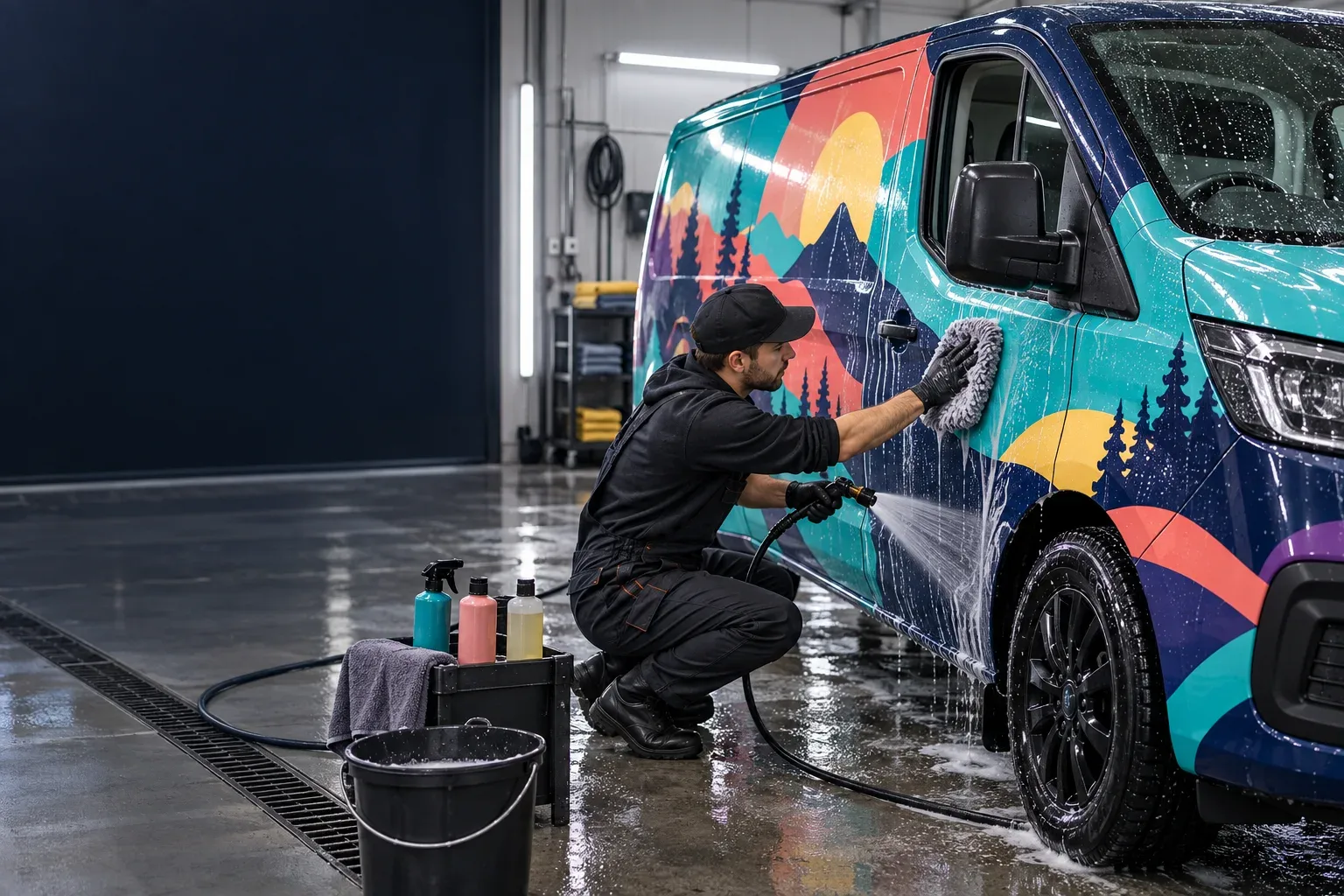
Regular gentle washing prevents contamination building up. Harsh chemicals, abrasive brushes and pressure directed closely at edges can damage the graphic or encourage lifting.
Bird deposits, fuel spills and aggressive contamination should be removed promptly using a method suitable for the film. Always follow the relevant manufacturer's aftercare guidance.
Plan inspection, repair and removal
Inspect edges, panel joins and high-contact areas regularly. Early attention to a damaged section can prevent moisture and dirt spreading beneath an edge.
Do not leave deteriorated film indefinitely. Removal normally becomes more difficult as materials age, and the condition of the underlying paint affects the outcome.